
© Better at Home, LLC
What Does an In-Home Caregiver Actually Do? A Room-by-Room Guide to Home Care Aide Duties (and What They Can't Do)
When families first call about home care, almost everyone asks some version of the same question: "What will the caregiver actually do while they're here?"
It's a fair question — and a surprisingly hard one to get a straight answer to. "Home care aide" can sound vague, and a lot of websites answer it with a short bulleted list that leaves you guessing. So this is the honest, detailed version: what an in-home caregiver really does across a typical day, the tasks they can't do (and why), how the hours tend to grow over time, and how to tell whether the care you're getting is actually good.
One clarification up front, because it trips almost everyone up: this guide is about non-medical home care — the personal care and daily support that helps someone stay safely at home. That's different from home health, which is skilled, clinical care (nursing, physical therapy) usually ordered by a doctor for a limited time. Many families use both. We wrote a separate guide on the difference, but the short version is: a home care aide helps with living; a home health nurse or therapist provides treatment.
The short answer
A home care aide helps an older adult (or anyone who needs a hand) do the everyday things that have gotten harder — safely, with dignity, in their own home. In practice that falls into six areas: personal care, meals and nutrition, household help and errands, mobility and safety, companionship and cognitive engagement, and medication reminders — all wrapped inside good communication with the family. Here's what each one actually looks like.
1. Personal care (the "activities of daily living")
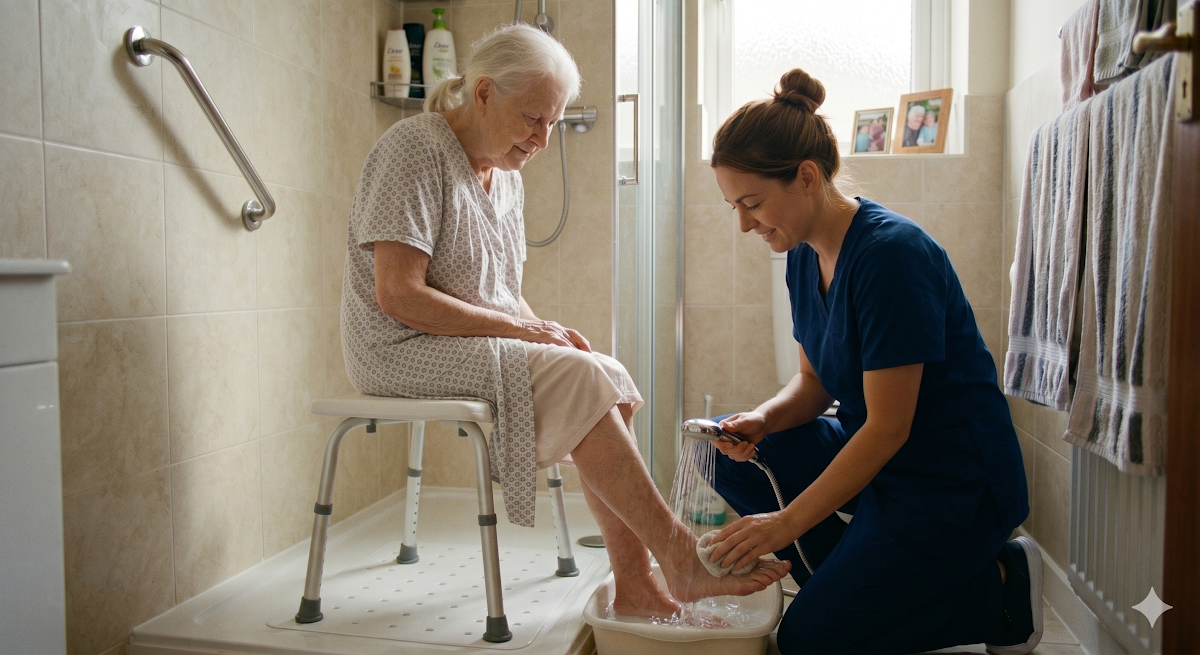
This is the heart of most home care. When bathing, dressing, or getting to the bathroom becomes unsafe or exhausting, an aide steps in — respectfully, at the person's pace. That typically includes:
- Bathing and showering — including safe transfers in and out of the tub or shower and watching for skin issues.
- Dressing and grooming — help choosing clothes, dressing, hair, shaving, and oral care.
- Toileting and incontinence care — assistance to and from the bathroom, and keeping things clean and comfortable if accidents happen.
- Transfers and repositioning — helping someone move from bed to chair to walker safely, and shifting position to prevent pressure sores for those who can't move on their own.
Good caregivers treat this part with real care for dignity. The goal is never to "do it for" someone — it's to help exactly as much as needed and no more, so the person keeps their independence and self-respect.
2. Meals and nutrition
Poor nutrition and dehydration are quietly among the biggest risks for older adults living alone. An aide helps by:
- Planning and preparing meals that match dietary needs (low-sodium, diabetic-friendly, soft foods, etc.).
- Grocery planning and shopping — this is why "groceries" is one of the most common things families ask an aide to handle.
- Encouraging regular eating and, importantly, hydration — many seniors simply forget to drink enough water.
- Assisting someone who has trouble feeding themselves, and cleaning up afterward.
3. Household help and errands
This is light housekeeping to keep the home safe and livable — not deep cleaning or heavy chores. Typically:
- Laundry, dishes, changing bed linens, and tidying up.
- Keeping walkways and high-traffic areas clear of clutter (which doubles as fall prevention).
- Errands — picking up prescriptions, dry cleaning, mailing things.
- Transportation and escort to medical appointments, the pharmacy, church, or the salon — and, just as valuable, staying with the person during the appointment so nothing gets missed.
4. Mobility and safety
Falls are the leading cause of injury for older adults, and a huge share of them happen at home. A caregiver is your set of eyes on the ground:
- Steadying help with walkers, canes, and wheelchairs, and safe transfers.
- Walking alongside someone who's unsteady, and encouraging gentle movement to keep strength up.
- Spotting hazards before they cause a fall — loose rugs, poor lighting, a cluttered stair, a wet floor.
- Being present so that if something does happen, someone is right there to respond and call for help.
5. Companionship and cognitive engagement
Families sometimes underrate this one — and then it turns out to be the part that changes everything. Isolation and loneliness carry real health consequences, and a caregiver provides genuine human connection:
- Conversation, shared meals, cards, puzzles, music, looking through old photos.
- Encouraging hobbies, walks, and social plans instead of another day alone in front of the TV.
- For those living with dementia: calm, patient redirection, familiar routines, and support through difficult stretches like late-day confusion ("sundowning").
- A steady, familiar face — which is exactly why consistency of caregiver matters so much (more on that below).
6. Medication reminders — and an important line
Here's where families most often misunderstand the scope. A home care aide can remind someone to take their medication, help open a bottle or organize a pill box, and let the family know if doses are being missed. What a non-medical aide generally cannot do is decide the dose, give injections, or otherwise administer medication — in most states that's reserved for licensed nurses, and the exact rules vary from state to state. If your loved one needs hands-on medication administration or clinical treatment, that's a skilled/home-health service, and a good agency will tell you so plainly rather than blur the line.
What an in-home caregiver can't do
Knowing the limits protects your loved one — so a trustworthy agency is upfront about them. A non-medical home care aide does not:
- Administer medications, give injections, or manage IVs.
- Perform wound care, catheter or feeding-tube care, or other skilled nursing tasks.
- Make clinical assessments or diagnoses, or change a care plan on their own.
- Provide physical, occupational, or speech therapy.
All of those fall under skilled home health care, which is delivered by nurses and licensed therapists. Many families run both at the same time — a home health nurse comes for the clinical piece while a home care aide handles daily life the rest of the week. If a task needs a license, it needs a licensed professional; the honest answer to "can the aide just do this one medical thing?" is usually no, and that's a feature, not a limitation.
How the hours usually grow over time
Very few families start with round-the-clock care. Far more common is a gradual, needs-driven climb. A typical path looks like this:
- A few hours, a few days a week — help with bathing, a couple of meals, errands, and companionship.
- Daily visits — as tasks like dressing and meals become harder to manage alone.
- Extended or overnight hours — after a hospital stay or a fall, or when nighttime wandering or safety becomes a concern.
- 24/7 care — for advanced needs, end-of-life comfort, or when a family caregiver can no longer safely fill the gaps.
A quick word to family caregivers: bringing in help doesn't mean you've failed. Care that starts small and grows with the need is the norm, not the exception — and it's usually what lets someone stay in their own home far longer than they otherwise could.
How to tell if the care is actually good
Every agency will tell you their caregivers are compassionate. What separates good care from frustrating care is usually the boring operational stuff. Watch for these:
- Consistency of caregiver. The single most common complaint families have about home care is churning through a different face every week. A familiar, regular caregiver builds trust, notices changes early, and simply provides better care. Ask how an agency handles consistency and coverage when your regular aide is out.
- Communication. Do they return calls quickly? Will you get real updates about how your loved one is doing, and a heads-up when something changes? Responsive, proactive communication is the number-one thing satisfied families point to.
- A real care plan — that flexes. Good care starts with an in-home assessment and a written plan, and it adjusts as needs change instead of staying frozen on day one.
- Thoughtful matching. Personality and continuity matter. The best agencies try to match a caregiver to the person, not just fill a slot on a schedule.
- Supervision and backup. There should be a supervisor checking in on quality, and a plan for what happens if a caregiver calls off — so you're never left scrambling.
How to get started
The usual first step is simple: a phone call, then a free in-home assessment where someone sits down with you and your loved one to understand the needs, the home, the routine, and what matters most to the family. From there you get a written care plan and a schedule — starting with as little or as much help as makes sense — and you can adjust as things change. There's no obligation in asking, and most families find that the hardest part was making the first call.
Have questions about care for someone you love? We're happy to talk it through — no pressure, no obligation. Better at Home provides personal care, companion care, and in-home support to help older adults live safely and comfortably at home.
🌐 betterathomehc.com · ✉️ info@betterathomehc.com · 📞 (440) 946-1600
Proudly serving Mentor, Wellington & the surrounding Northeast Ohio communities.

